The Mysterious Gift of Our Loyal Friends: Can Dogs Sense Death?
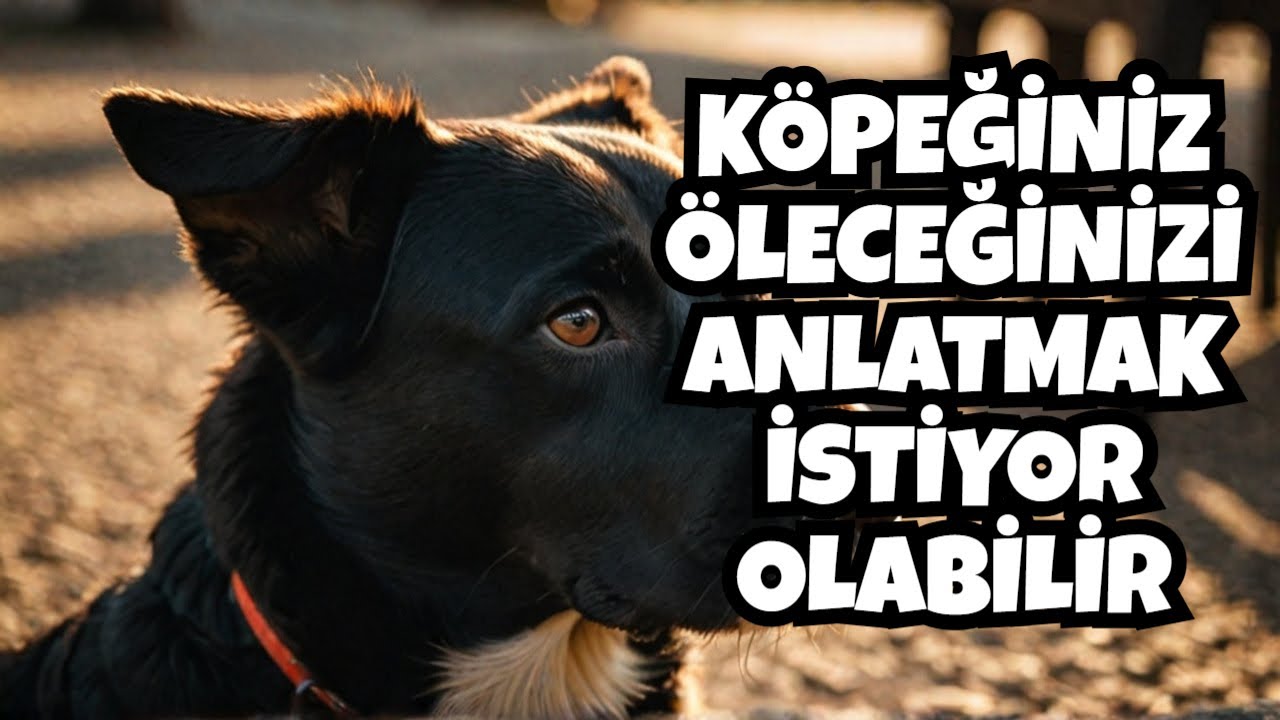
They are the joy of our homes, our most loyal companions. With their unconditional love and sincere devotion, our dogs give meaning to our lives. But are they observing a world beyond our perception? For centuries, ancient beliefs passed down through generations have whispered that they might be more than just pets—that they could be harbingers of the unseen. So, what truth lies behind these beliefs? Can a dog truly sense an impending end or a great catastrophe? Let’s explore this mysterious topic together in the light of folklore and ancient tales.
- The Mysterious Gift of Our Loyal Friends: Can Dogs Sense Death?
- The Place And Importance Of Animals In Folklore
- What Are The Signs That A Dog Is Foretelling Death?
- The Manner, Time, And Direction Of The Howl
- Dog Howling In Different Cultures And Anatolian Narratives
- Protection Methods Applied When These Signs Are Seen
- Final Word
- Bibliography
The Place And Importance Of Animals In Folklore
Throughout history, humanity has lived in close connection with nature, carefully observing the behavior of animals. The keen senses, intuition, and unusual actions of animals—qualities not found in humans—have often been interpreted as omens of coming events. The song of a bird, the neigh of a horse, or the howl of a wolf were sometimes seen as good news, and other times as warnings of an approaching disaster.
These beliefs are rooted in whether an animal is considered lucky or unlucky, its physical attributes, and the widespread notion that they are close to the human spirit. So much so that a person who saw or heard such a sign would feel a spiritual unease and resort to various rituals to ward off the negativity they believed was on its way. Among these messengers, the dog, man’s closest friend, holds a special place.
What Are The Signs That A Dog Is Foretelling Death?
Known for their loyalty and advanced intuition, dogs are seen in many cultures not just as friends, but as spiritual sentinels. According to popular belief, dogs announce an approaching death not only with their howl but also through its specific manner, time, direction, and location. These signs have been interpreted like a code for generations.
The Manner, Time, And Direction Of The Howl
According to ancient beliefs and the works that have chronicled them, not every howl carries the same meaning. For a howl to be considered a “harbinger,” it is believed to possess certain characteristics:
Manner of Howling:
- A long, continuous howl that pierces one’s soul.
- A mournful and sorrowful howl, as if expressing a deep pain.
- A howl that is persistent and frequent, repeated without pause.
Time of Howling:
- A howl heard at night, when all is quiet and everyone is asleep.
- A howl heard towards dawn, at the moment of deepest silence as the day breaks.
Place and Direction of Howling:
- Howling while facing a specific house.
- Standing directly in front of a home’s door.
- Howling with its mouth raised directly to the sky, as if calling out to an unseen entity.
The observation of one or more of these signs together was traditionally accepted as a powerful omen that a sorrowful event would occur in that vicinity.
Dog Howling In Different Cultures And Anatolian Narratives
The belief that dogs are harbingers of death is a universal one. For example, Bulgarians and Slavs directly associate dog howling with illness or death. In Polish folklore, if a dog howls or digs at the earth, it signifies that death is approaching that home. Similarly, in East Prussia, a dog that persistently howled towards a house where a sick person lay was believed to be announcing that person’s impending death.
The most vivid and poignant examples of these beliefs, however, come from the oral traditions of Anatolia. Here are two striking examples:
“According to a legend collected from the Merzifon district of Amasya, when a dog howls, it is actually seeing Azrael (the Angel of Death) and is trying to warn its owner. On the night or morning that the howl is heard, a death would inevitably occur in that household.”
“Another story from the Hopa region of Artvin serves as a powerful lesson: In a village in the Tortum valley, a wise old woman noticed the village’s female dog doing something strange. The dog was carrying her puppies, one by one, up into the mountains. Sensing from the animal’s urgency that a disaster was imminent, the woman informed the villagers and urged them to move to the mountains as well. However, the villagers paid no heed to her words. Soon after, a massive landslide occurred. It blocked the valley’s stream, and the rising waters swallowed the entire village in moments. From this great catastrophe, the only survivor was the old woman who had listened to the warning of a loyal animal.”
Protection Methods Applied When These Signs Are Seen
When faced with such warning signs, people did not remain helpless; they developed a series of protection methods they believed could change fate or at least mitigate the negative effects. When a dog was heard howling in a manner believed to be an omen, the following actions were traditionally taken:
- The howling dog is chased away or stoned.
- Bread is crumbled before the dog. The purpose here is to distract it and turn its intention towards “good.”
- A phrase is shouted at the dog, such as “Let it befall your own head!” (a folk spell to deflect the perceived curse).
These practices are cultural rituals that reflect humanity’s struggle against the unknown and its instinct to protect life.
Final Word
So, are all these narratives merely superstitions passed down through generations? Or does our loyal friends’ incredible sense of smell detect things we cannot, like the scent of disease or chemical changes in the body? Or perhaps their sensitive ears are picking up frequencies we cannot hear, like the tremors of an earthquake or the hum of an approaching storm?
While science has begun to confirm some of these claims (for example, that dogs can smell certain cancers), the mysterious world of folklore still holds many secrets. One thing is certain: the next time your dog tries to tell you something with an insistent, unusual demeanor, it might be worth stopping for a moment to listen and try to understand. Because sometimes, the deepest secrets are hidden in the eyes of our most loyal friends.
Bibliography
- Sax, Boria. Animals in the Third Reich: Pets, Scapegoats, and the Holocaust. Continuum, 2000.
- Thompson, Stith. The Folktale. University of California Press, 1977.
- Zipes, Jack. The Great Fairy Tale Tradition: From Straparola and Basile to the Brothers Grimm. W. W. Norton & Company, 2001.
- Westermarck, Edward. Ritual and Belief in Morocco. Macmillan and Co., 1926.