Common Myths About Dream Interpretations
Separating Fact from Fiction
Dreams have fascinated humanity for centuries, inspiring countless interpretations and theories. However, many misconceptions and myths surround the concept of dream interpretation, often blurring the line between fact and fiction. While dreams offer valuable insights into the subconscious mind, not all interpretations are grounded in reality.
- Common Myths About Dream Interpretations
- Myth 1: Dreams Always Predict the Future
- The Belief
- The Reality
- Myth 2: Every Dream Symbol Has a Universal Meaning
- The Belief
- The Reality
- Myth 3: Dream Interpretations Are Always Accurate
- The Belief
- The Reality
- Myth 4: Nightmares Are Always a Bad Omen
- The Belief
- The Reality
- Myth 5: Dying in a Dream Means You Will Die in Real Life
- The Belief
- The Reality
- Myth 6: Every Dream Has a Hidden Message
- The Belief
- The Reality
- Myth 7: Recurring Dreams Always Mean the Same Thing
- The Belief
- The Reality
- Myth 8: Dreams Are Always Spiritually Significant
- The Belief
- The Reality
- Separating Fact from Fiction in Dream Interpretation
- Demystifying Dream Interpretation
- References
This article explores the most common myths about dream interpretation and provides a factual perspective to help distinguish truth from popular misconceptions.
Myth 1: Dreams Always Predict the Future
The Belief
Many people think that dreams are prophetic and reveal future events. For example, dreaming about a journey may be interpreted as a sign of upcoming change, or seeing gold may be taken as an indication of future wealth.
The Reality
Dreams primarily reflect the dreamer’s thoughts, emotions, and subconscious processes rather than predicting future events. They are shaped by past experiences, current concerns, and unresolved conflicts. While some dreams might align with future occurrences by coincidence, their primary function is not to predict.
Source: Domhoff, G. W. (2003). The Scientific Study of Dreams.
Myth 2: Every Dream Symbol Has a Universal Meaning
The Belief
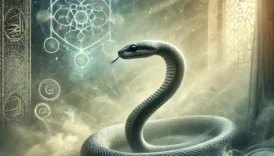
Certain symbols, such as water, snakes, or stairs, are often thought to have fixed, universal meanings. For example, water is said to symbolize emotions, while snakes represent danger or deceit.
The Reality
Symbols in dreams are highly subjective and can vary significantly depending on the dreamer’s personal experiences, cultural background, and emotions. For one person, a snake may represent fear, while for another, it may symbolize transformation or wisdom.
Source: Jung, C. G. (1968). Man and His Symbols.
Myth 3: Dream Interpretations Are Always Accurate
The Belief
Dream interpretation books and guides often present definitive meanings for every dream scenario, suggesting that interpretations are precise and universally applicable.
The Reality
Dream interpretations are not an exact science. They require consideration of the dreamer’s unique psychological and emotional context. The same symbol or scenario can have different meanings for different people, making dream interpretation a subjective and fluid process.
Source: Freud, S. (1900). The Interpretation of Dreams.
Myth 4: Nightmares Are Always a Bad Omen
The Belief
Many believe that having a nightmare is a sign of impending doom or a negative life event. For example, dreams of falling might be taken as a warning of failure.
The Reality
Nightmares are often a reflection of stress, anxiety, or unresolved fears. They serve as a way for the subconscious mind to process challenging emotions. While they can be unsettling, they are rarely predictive of real-life events.
Source: Hobson, J. A. (2002). Dreaming: An Introduction to the Science of Sleep.
Myth 5: Dying in a Dream Means You Will Die in Real Life
The Belief
A persistent myth suggests that dying in a dream indicates imminent death in reality.
The Reality
Psychologically, dreaming of death is more likely to symbolize significant change, personal growth, or the end of a phase in life. It reflects transformation rather than a literal event.
Source: Jung, C. G. (1968). Man and His Symbols.
Myth 6: Every Dream Has a Hidden Message
The Belief
Some believe that all dreams contain profound meanings and messages that must be deciphered.
The Reality
Not every dream carries a hidden or significant message. Some dreams, particularly those occurring outside of REM sleep, may simply be the result of random neural activity with no deeper meaning.
Source: Hobson, J. A., & McCarley, R. W. (1977). The brain as a dream-state generator: An activation-synthesis hypothesis of the dream process. American Journal of Psychiatry.
Myth 7: Recurring Dreams Always Mean the Same Thing
The Belief
Recurring dreams are often thought to deliver a single, unchanging message.
The Reality
Recurring dreams often highlight unresolved issues or emotions, but their meaning can evolve based on the dreamer’s current circumstances. The same dream might represent different challenges or emotions at different points in life.
Myth 8: Dreams Are Always Spiritually Significant
The Belief
In many cultures, dreams are viewed as divine messages or spiritual guidance.
The Reality
While some dreams may carry spiritual significance, the majority are more closely tied to psychological and emotional processes. The spiritual interpretation of dreams depends on individual beliefs and the dream’s context.
Source: Ibn Sīrīn, Kitab al-Ta’bir.
Separating Fact from Fiction in Dream Interpretation
Dreams are a complex interplay of emotions, thoughts, and memories expressed through symbolic imagery. While they can provide valuable insights into the subconscious, it is essential to approach dream interpretation with a balanced perspective, separating fact from widely held myths.
Demystifying Dream Interpretation
Dream interpretation is an intriguing yet subjective practice. Understanding the common myths surrounding dreams helps clarify their true nature as reflections of the subconscious mind rather than definitive predictors of the future or universal truths. By recognizing the individuality of dreams and the unique experiences they reflect, we can approach their interpretation with greater accuracy and understanding.
References
- Freud, S. (1900). The Interpretation of Dreams.
- Jung, C. G. (1968). Man and His Symbols.
- Domhoff, G. W. (2003). The Scientific Study of Dreams.
- Hobson, J. A. (2002). Dreaming: An Introduction to the Science of Sleep.
- Ibn Sīrīn, Kitab al-Ta’bir.
This article provides a factual overview of dream interpretation, debunking myths and shedding light on the true nature of dreams as tools for understanding the subconscious.









Отличная статья, очень четко разоблачает распространенные мифы! Спасибо за научный подход.
У меня возник вопрос по поводу восьмого мифа, о духовной значимости снов. Вы упомянули, что их интерпретация сильно зависит от культурного контекста. Это абсолютно верно, и это напомнило мне, как часто люди переносят подобные мифы и заблуждения на другие области жизни, например, на юридические процессы.
Я недавно читал материал о том, как много ложных представлений существует вокруг получения налогового номера NIE в Испании — люди часто думают, что он дает право на residency или работу, что совершенно не так, очень похоже на мифы о снах, которые вы описали. Вот ссылка на ту статью, там тоже хорошо разделяют факты и вымысел: https://e-residency.com/blog/common-nie-myths-spain/
Как вы считаете, насколько важно в таком разоблачении мифов, будь то сны или юридические вопросы, опираться именно на официальные источники и экспертные мнения, а не на народные поверья?
Ótimo artigo! Gostei especialmente da forma como vocês desmistificam os mitos comuns sobre interpretação de sonhos, usando fontes científicas e psicológicas. Isso me fez pensar em como equívocos semelhantes surgem em outras áreas, como questões legais e burocráticas.
Recentemente, li um artigo sobre os mitos comuns em torno do NIE na Espanha (https://e-residency.com/blog/common-nie-myths-spain/) e percebi que muitas pessoas têm ideias erradas sobre o que esse documento realmente permite, assim como ocorre com os sonhos. Vocês acham que há um padrão psicológico ou cultural que faz com que as pessoas criem e perpetuem mitos, mesmo quando há informações claras disponíveis? Será que isso está ligado à nossa tendência de buscar significados ocultos ou simplificações, como no caso dos sonhos?