The War That Shook the Skies: Turkey’s Witnessed Stork-Eagle Conflict
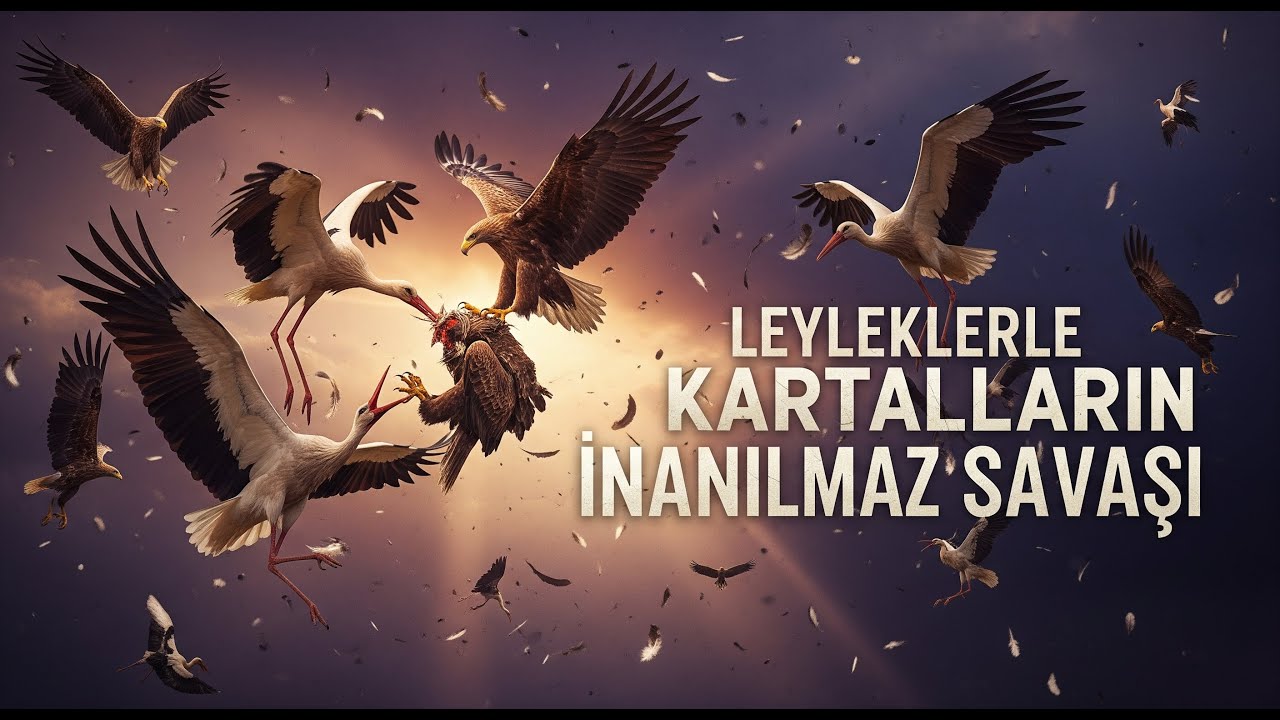
In 1934, the skies of western Turkey witnessed an unprecedented event. A fierce, weeks-long battle between storks and eagles was chronicled in newspapers and left a lasting mark on the public. This is a forgotten war of nature.
- The War That Shook the Skies: Turkey’s Witnessed Stork-Eagle Conflict
- The Spark of War: Tension Begins in Orhangazi
- The Sky Armies Assemble
- The Great Clash at the Menderes Delta
- The People Take the Storks' Side
- The Storks' Surprising War Tactics
- Echoes of the War and the International Press
- Not Just in 1934: Other Stork-Eagle Wars
- Final Thoughts
- Bibliography
The Spark of War: Tension Begins in Orhangazi
It all began in the summer of 1934 with what seemed like an ordinary event of nature in the Orhangazi district of Bursa. A group of eagles, believed to have descended from Mount Uludağ, attacked a stork’s nest. In this first assault, the mother and father storks were killed, while four young chicks were carried away by the eagles. This tragic event was merely the first harbinger of the great war to come.
A few days later, the eagles returned to attack another stork’s nest. This time, however, they found it empty. The storks, as if possessing an organized intelligence network, had already moved their young to a safer location. This move can be seen as the storks’ first conscious resistance against the systematic attacks of the eagles.
The Sky Armies Assemble
The tension quickly spread throughout the region. As the eagles’ attacks continued to escalate, an incredible migration of storks began from all corners of the country towards the skies of Bursa and Aydın. Hundreds, even thousands, of storks gathered in the war zone as if answering a call. Of course, the eagles did not ignore this assembly and began to consolidate their own ranks. The sky was preparing to host two massive armies.
The Great Clash at the Menderes Delta
This mutual show of force, which lasted for about two months, turned into an all-out war over the Menderes delta in Aydın in August. The public watched this relentless struggle in the sky with astonishment and curiosity. On one side were the eagles with their deadly talons; on the other, the storks with their sharp and powerful beaks. It was a battle where brute force met organized resistance.
The People Take the Storks’ Side
In this unique war, the hearts and support of the people were firmly with the storks. In that era, these regions were Turkey’s most fertile agricultural lands, and storks were seen as natural allies that cleared the fields of pests. Therefore, the villagers indirectly intervened in the war by trying to treat the storks that fell wounded to the ground and feeding the chicks in the nests.
The Storks’ Surprising War Tactics
Reports from the battlefield indicated that the storks were superior not only in number but also in tactics. According to observations, young and dynamic storks fought on the front lines to tire and wear down the eagles. When a tired eagle was identified, experienced and older storks would step in to deliver the final blow. This organized strategy was the storks’ greatest weapon against the eagles’ raw power.
Echoes of the War and the International Press
This event caught the attention not only of the local press but also of international agencies. The correspondent for The Times in Turkey at the time reported the news to the world with these words:
“An unusual war between 300 storks and 600 eagles… Hostilities began when 6 eagles attacked a stork’s nest. They killed the mother and father storks and carried off the young… In the end, victory went to the storks at the cost of 12 dead and 50 wounded. As for the eagles, 20 were reported dead.” (The Times, August 18, 1934)
This report clearly recorded the outcome of the war as a victory for the storks.
Not Just in 1934: Other Stork-Eagle Wars
The skies of Turkey would later witness similar battles. The Hürriyet newspaper, dated July 12, 1959, featured a similar conflict in Aydın in its columns:
“Aydın – In the stork-eagle war that has been going on for three days, the storks gained the upper hand today, and for the first time, about 30-40 storks came to the city, visiting all the nests to tend to their young… Farmers working near the Menderes River reported that about 2,000 storks arrived this morning to aid those fighting.” (Hürriyet, July 12, 1959)
A similar report came from Tarsus in 1967. An AAP-Reuters news item dated August 10, 1967, reported that the war in Tarsus also ended with the “unexpected victory of the storks.”
Final Thoughts
The events of 1934 are an incredible illustration that nature is not just about its internal balance and cycles. It also hosts creatures that can act with a collective consciousness, develop organized strategies, and even dispense justice by their own means. This war, lost in the dusty pages of history, continues to remind us of how mysterious and powerful nature is every time we look up at the sky.
Bibliography
“An unusual war between 300 storks and 600 eagles”. (1934, August 18). The Times.
“Fighting Storks and Eagles Are Receiving Reinforcements”. (1959, July 12). Hürriyet.
AAP-Reuters. (1967, August 10). Hundreds of eagles that lost an air battle with storks over a valley near Tarsus… [News text].





Thanks for sharing. I read many of your blog posts, cool, your blog is very good. https://accounts.binance.com/el/register-person?ref=DB40ITMB