The Forbidden Fruit of the Ottoman Palace: The Astonishing Turkish Adventure of the Avocado
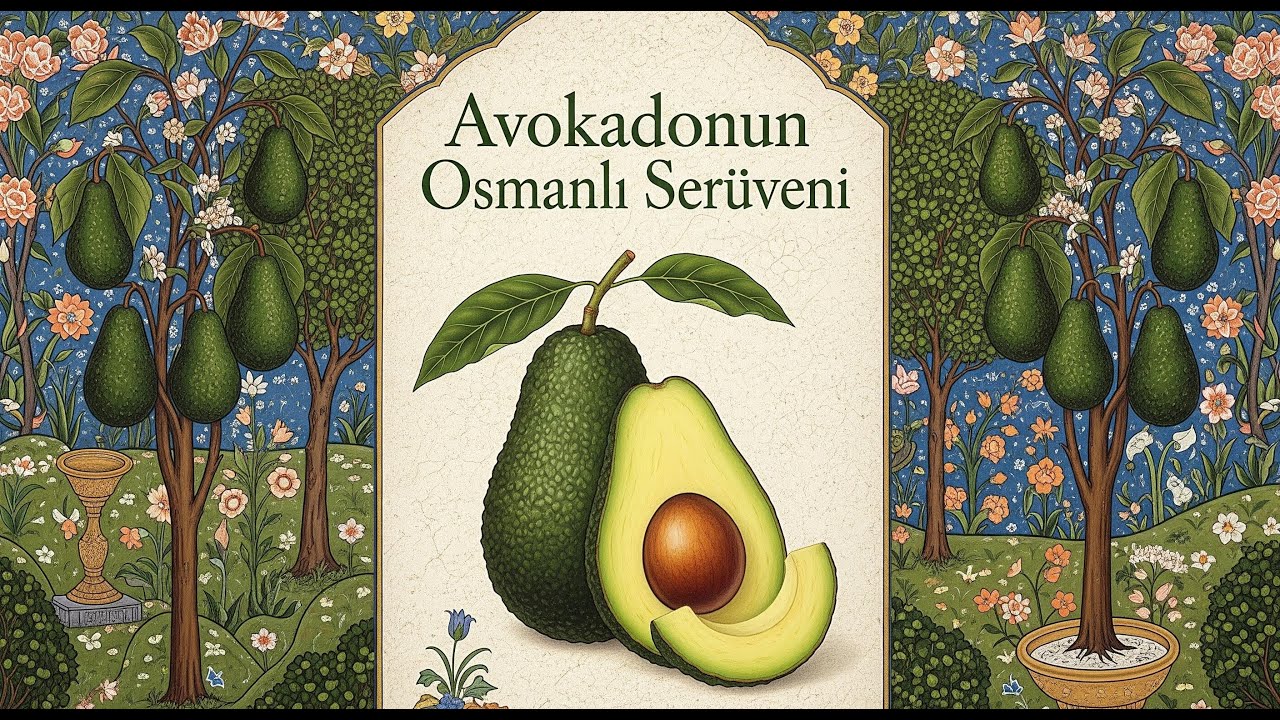
During the Ottoman Tulip Era, a scholar introduced the avocado to Turkey. Beloved by the palace, the fruit was “banned” and burned after a revolt. This is the incredible story of the avocado, which began and ended on these lands 250 years ago. A surprising tale from history’s dusty shelves.
- The Forbidden Fruit of the Ottoman Palace: The Astonishing Turkish Adventure of the Avocado
- The Curious Scholar of the Tulip Era: Molla Kamil Efendi
- The Palace's New Favorite: The Alligator Pear and Its Benefits
- The Patrona Halil Revolt and the Bitter End of a Fruit
- Final Thoughts
- Bibliography
The Curious Scholar of the Tulip Era: Molla Kamil Efendi
The year is 1688… In Ioannina, a child named Molla Kamil Efendi was born, shining with his intelligence and passion for learning. While his family dreamed of him becoming a religious scholar, his heart and mind were set on the positive sciences, especially the secrets of nature. This passion led him, with the inheritance from his father, first to Rome and then to Paris, the center of botanical and agricultural sciences.
Upon returning to Istanbul with his modern education, his path led to the palace. His diligence and knowledge caught the attention of the famous grand vizier of the Tulip Era, Nevşehirli Damat İbrahim Pasha. The event that changed his life occurred in 1720, when a mysterious disease struck Istanbul’s famous tulip gardens. When Molla Kamil saved the tulips using scientific methods, he was honored by Sultan Ahmed III with the title “Halaskaran-ı lalezar,” meaning “Savior of the Tulip Gardens.”
The Palace’s New Favorite: The Alligator Pear and Its Benefits
His reward for this success was a plot of land in Yalova. Here, Molla Kamil rolled up his sleeves to realize his dream of cultivating a fruit he had come to admire in Europe: the avocado. After long trials and cross-breeding efforts, he succeeded in growing avocado trees adapted to the Yalova climate.
When he presented his harvest to the palace with a risale (a small booklet) describing its benefits, this new flavor aroused great curiosity. In his treatise, Molla Kamil praised the avocado with these words:
“This tree, named Avokad, which they also call the alligator pear, its benefits are countless. Its shade is pleasant, its appearance is fine, its fruit is delicious and healing. Its fruit is a taste of paradise, it goes well with whatever it is eaten, gives freshness to the mouth and relief to the stomach. When its oil is applied, it adds a pearly glow to the skin. If its leaves are boiled and drunk, it is the cure for hasat-ül kilye (kidney stones)…”.
After Grand Vizier Damat İbrahim Pasha served it at his receptions, the avocado quickly became a sought-after exotic delicacy on the tables of Istanbul’s elite.
The Patrona Halil Revolt and the Bitter End of a Fruit
However, the avocado’s reign in the Ottoman palace did not last long. The Patrona Halil Revolt, which broke out in 1730, targeted not only the innovations of the Tulip Era but also Molla Kamil Efendi and his “alligator pear,” which had become symbols of the period. As historian Erhan Afyoncu states, this revolt “wiped out all the innovations of the Tulip Era.” The destructive nature of the rebellion, unfortunately, also struck the avocado trees.
The rebels executed the Grand Vizier along with Molla Kamil Efendi. But it didn’t end there. A group of fanatics among the rebels spread an irrational rumor that the avocado was the product of a union between a “crocodile and a tree.” Following this slander, a fatwa was issued declaring the fruit “makruh” (religiously discouraged) and that it was not permissible to cultivate or eat it in a Muslim land.
This fatwa was the avocado’s death warrant. All the avocado trees in Yalova, cultivated with great effort, were burned and destroyed.
Final Thoughts
Thus, one of the first modern agricultural experiments on Turkish soil came to an end in the fire of ignorance and bigotry. It would take nearly 250 years for the avocado, once praised for its healing properties and flavor on palace tables, to return to these lands. Molla Kamil Efendi’s story remains on the dusty pages of history as a bitter proof of how fragile knowledge and innovation can be.
Bibliography
- Afyoncu, Erhan. Sağlık Tarihimizden İlginç Fıkralar (Interesting Anecdotes from Our History of Health). Yeditepe Yayınevi, Istanbul, 2020.
- (The quote from Molla Kamil Efendi’s avocado treatise is cited as it appears in popular historical narratives and accounts.)





https://shorturl.fm/9QoR4
Thanks for any other informative web site. The place else could I get that kind of information written in such an ideal method? I have a undertaking that I am just now running on, and I have been on the look out for such information.
lee bet
WOW just what I was searching for. Came here by searching for %meta_keyword%
сайт leebet casino
I loved as much as you will receive carried out right here. The sketch is tasteful, your authored material stylish. nonetheless, you command get bought an impatience over that you wish be delivering the following. unwell unquestionably come more formerly again since exactly the same nearly very often inside case you shield this increase.
казино рио бет
Explore detailed insights on projection alarm clocks at TOPCLOCKS, including features, comparisons, and expert recommendations for smarter buying decisions.
Hi there all, here every person is sharing such know-how, so it’s pleasant to read this web site, and I used to visit this webpage daily.
https://drive.google.com/file/d/1qRykr-BEQN9yO9-t-aphGZUXCp_s9axk/view?usp=sharing
8xbet 的用户评价褒贬不一。Visit us: أفضل مكافأة كازينو 8xbet
我看到了几篇关于 elemental.sa.com 的警告帖子。避免在这里注册 – 它会在三周前创建的域名上推送新会员奖励和每日促销。Visit us: Ist elemental.sa.com legitim? Registriert im Februar 2026 – Überprüfen Sie vor der Einzahlung
रिमूवमी.ज़ा.कॉम के बारे में चेतावनियाँ फैल रही हैं। यह ताज़ा फरवरी 2026 डोमेन पूर्ण गोपनीयता सुरक्षा का उपयोग करता है और इसकी कोई वास्तविक समीक्षा नहीं है – क्लासिक संकेत यह चोरी हो जाएगा और गायब हो जाएगा।Visit us: kckjyy.za.com 否定的な警告: この新しいドメインは現在被害者をターゲットにしています
qmej.sa.com の周囲ではパニックが爆発しています。詳細が完全に埋もれた真新しい 2 月の登録 – 会社も痕跡もなく、まったくの真空状態。Visit us: qmej.sa.com Lừa Đảo CATASTROPHE : Forteresse de confidentialité + Nouveau domaine = Fin
Wow, awesome blog structure! How long have you ever been blogging for? you make blogging glance easy. The full glance of your site is magnificent, as neatly as the content material!
https://mostbet-zerkaloonline.buzz/tr/gates-of-olympus-sloty-na-iphone/
Hey there! This post couldn’t be written any better! Reading through this post reminds me of my old room mate! He always kept chatting about this. I will forward this post to him. Pretty sure he will have a good read. Thanks for sharing!
Timothy Malmros Genach
It’s awesome for me to have a site, which is useful in support of my know-how. thanks admin
Site de paris sportif crypto
Keep on working, great job!
Hot to Burn Multiplier
Hi there this is somewhat of off topic but I was wanting to know if blogs use WYSIWYG editors or if you have to manually code with HTML. I’m starting a blog soon but have no coding experience so I wanted to get advice from someone with experience. Any help would be enormously appreciated!
บาคาร่า
https://t.me/s/prodvizhenie_telegram_v_top
This discussion feels easy to connect with and well organized, making the content easier to understand while still encouraging thoughtful interaction from readers.
free spins no deposit
This post keeps the discussion easy to follow and engaging while making the topic easy to follow and comfortable for many different readers online.
bookmaker sans limite de mise
I think this post is written in a very successful way since the ideas flow naturally from one point to another, making the content easier to understand while also encouraging people to stay engaged in the conversation.
casino en ligne retrait instantane
I like how this post keeps the ideas clear and simple to follow while also maintaining a balanced and interesting conversational style throughout.
fastest withdrawal online casino canada
The way this post is written makes the discussion feel well explained, pleasant, and easygoing while also keeping the topic easy for readers to follow closely.
bookmaker sans limite de mise
This was exactly the kind of trustworthy reading material I was looking for to fill my afternoon break, and I truly value the neutral approach you used to cover all the necessary bases without any distractions.
https://dollyolive.co.uk/
Really helpful write-up, thanks for putting this together.
ryan driller gay porn
科里追逐強迫色情
marissa lamb porn
порно деревенское
raven teen titans go porn
The overall tone of this post feels calm and useful at the same time, which helps create a positive and interesting reading experience for different audiences.
скачать мелбет
This is a remarkably helpful breakdown of the subject matter. You have successfully captured the most important elements and presented them in a completely neutral, straightforward manner that allows anyone to easily grasp the underlying concepts without feeling lost.
https://health-solution.nl/
I appreciate the easygoing and friendly tone used in this post because it creates a more enjoyable reading experience overall.
anorexic girls sex
頂級色情景點
gynocologist porn
同性戀色情高清免費
миссионерская порно
What makes this post interesting to read is the combination of a natural tone and a nicely arranged structure, because together they create a discussion that feels both informative and pleasant for a wide variety of readers.
https://cocomosaic.nl/
disney princesses porn
порно саха
I like how this post manages to stay informative while also keeping a relaxed and conversational tone, because it makes the content clearer to follow, more comfortable to read, and much more likely to encourage people to join the discussion in a positive way.
bbw
I like how this post keeps the ideas well structured and well-rounded while still maintaining a easygoing conversational tone throughout.
在线购买他达拉非片用于肛交XXX色情
This post does a great job of presenting the topic in a simple but still meaningful way, because the layout, phrasing, and overall tone make it comfortable to follow while also encouraging a thoughtful and respectful conversation in the comments section.
13 years porno
The formatting and overall presentation of this post are absolutely top-notch. It ensures that the most critical pieces of information stand out clearly without feeling overwhelming.
maheir porno
This was exactly the kind of solid reading material I was looking for to fill my afternoon break, and I truly value the balanced approach you used to cover all the necessary bases without any distractions.
jmac porno
The tone of this post feels calm and well-considered, helping the discussion stay easy and approachable.
turkce porno izle
One of the best things about this post is how easy to follow and easy to follow it feels, since the wording stays smooth and the discussion remains engaging and open to different perspectives throughout.
This site scams its users
I just wanted to leave a quick note to say how useful this overview is. The well-organized structure and completely neutral perspective provide a really solid foundation for understanding the topic.
Este sítio é uma fraude
This post presents the ideas with clarity and in a respectful way, creating a discussion that feels positive and comfortable for readers.
Xxx video onlyfans pornhub video
This post creates a welcoming atmosphere for discussion by keeping the tone balanced and the content clear.
adult xxx video porn site xxx sex video
The way this post is written makes the whole discussion feel very natural and simple to understand, while also keeping enough substance in the topic to make readers interested in sharing their own opinions and continuing the conversation further.
adult xxx video porn site xxx sex video
viagra alternativen
The level of detail provided in this write-up is genuinely strong, and it is clear that a significant amount of thought and preparation went into ensuring the final result would be this useful to the audience.
10 zoo porno
This is a perfect example of how to present information in a way that is accessible to a wide audience while still maintaining a high standard of clarity from the introductory sentences all the way to the final conclusion.
https://fyrleyfoodbar.nl/
I genuinely enjoyed reading through your perspective on this, as it is always beneficial to encounter well-articulated thoughts that provide a clear and concise overview of the subject matter without being overly biased.
https://comparenergiezuinig.nl/
The way you seamlessly transitioned from one point to the next kept me fully engaged the entire time, and I walk away feeling significantly more knowledgeable about the subject matter than I did beforehand.
https://microdosing-xp.nl/
Thank you for compiling these essential points into such an accessible format. The organized layout combined with your completely neutral perspective results in an outstanding piece of writing that genuinely helps the audience understand the broader context of the situation.
kasyno blik online
This is a perfect example of how to write an accessible and useful article. The clear formatting and completely balanced tone made it an absolute pleasure to read through today.
nowe kasyna online polska